
From Minimal Towers to Multi-Level Feline Playgrounds
Choosing cat furniture becomes much easier once the room and the cat are considered together. A compact apartment may need something tall and narrow, while a larger home can accommodate a wider structure with several platforms and resting areas. A well-chosen naturkratzbaum can make smart use of available space while giving a cat opportunities to climb, scratch, watch, and relax. The important part is finding a design that fits naturally into everyday life rather than simply choosing the biggest model available. Looking at floor space, ceiling height, nearby furniture, and a cat’s favorite activities can quickly narrow down the options and lead to a setup that feels comfortable for everyone.
Size is often the first practical consideration, especially in rooms where every corner already has a purpose. Slim vertical trees can work beautifully near a window or beside a sofa because they offer height without demanding much floor space. Larger models, on the other hand, can provide multiple routes for climbing and several separate resting spots. Before buying, it helps to measure the area carefully and think about how people move through the room. A cat tree should feel accessible without becoming an obstacle. Leaving enough space around the base can also make cleaning easier and give energetic cats room to jump on and off safely.
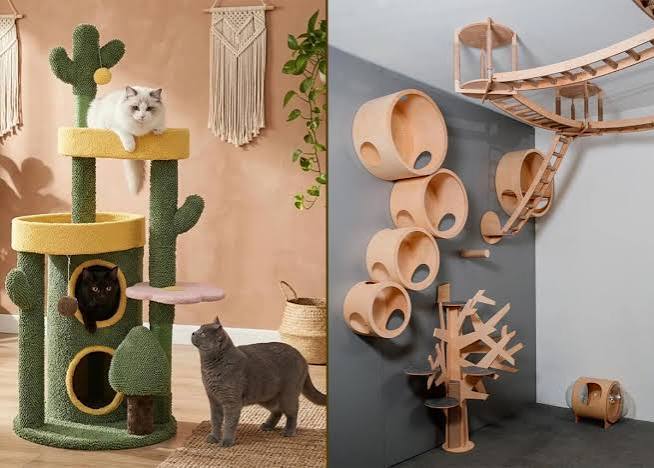
The number and personality of the cats matter just as much as the dimensions of the room. One relaxed cat may be perfectly content with a modest tower and a comfortable perch, while a lively pair may appreciate several levels and more than one scratching surface. Multi-cat households often benefit from designs with separate beds or platforms because not every cat wants to share a favorite spot. Age can influence the choice too. Younger cats may enjoy higher jumps and challenging routes, while older cats can be more comfortable with wider platforms and shorter distances between levels. Matching the layout to real habits usually makes the furniture more appealing.
Materials and construction deserve a close look because attractive design means little when the structure feels unstable. Solid bases, dependable posts, durable scratching surfaces, and securely attached platforms help create confidence under a cat’s paws. Natural wood, sisal, woven fibers, and soft resting materials can also complement interiors without making the room feel overly busy. Maintenance is another detail worth considering. Removable cushions, accessible surfaces, and materials that are easy to wipe or vacuum can make ownership much simpler. A thoughtfully made tree should cope with regular scratching, climbing, and sleeping without quickly looking worn or becoming difficult to maintain.
The best choice is ultimately the one that suits both the home and the animals living in it. A carefully selected naturkratzbaum can be compact and understated, tall and adventurous, or spacious enough for several cats to enjoy at once. Rather than focusing only on appearance, it helps to compare stability, platform placement, scratching options, resting areas, and ease of access. When those features match a cat’s age, energy level, and daily routines, the tree is more likely to become a genuinely useful part of the home. With the right proportions and design, even a simple corner can become a comfortable place for exercise, observation, play, and long afternoon naps.